While it may seem that storing gas cylinders in an open space makes sense, Naturally, the reality is that this leads to a variety of risks and compliance problems. Provide protection for cylinders against impact, unauthorised access and mishandling. This is where secure containment comes into play during an audit of the site.
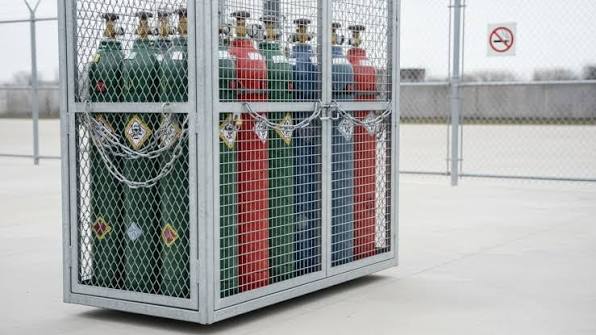
As noted, a well-rated gas cage gives workers a controlled storage area while allowing cylinders to remain visible and accessible in the cage for authorised personnel. It can also assist firms in showing that gas storage is not a matter of spontaneous fun.
What is a Gas Cage?
Gas cages are security structures which are designed to store gas cylinders. Normally, it has a solid steel structure, enough ventilation, and a lockable entrance.
This keeps cylinders out of light-duty work areas. This also reduces the chance of cylinders being knocked over for example or hit by vehicles and equipment.
Good housekeeping still matters. Your cage will NOT replace proper handling practices and regular checks.
What is Open Storage and Why Does It Not Solve the Problem?
Gas cylinders being in an open storage area can have several dangers. Passage of forklifts, vehicles, or other equipment may be near. Cylinders may be moved by unauthorised persons or left in a bad location.
Inspectors may examine how cylinders are stored, secured, and protected from workplace hazards during an audit.
These controls are easier to demonstrate with an organised storage area.
Containment and Site Audits
It is not simply whether or not equipment exists in a site audit. It can also look at whether workplace controls are appropriate, maintained, and properly used.
A secure gas cage can provide facilities with an identified space when storing cylinders, enabling better storage practices. It might even do more to identify cylinders that are missing, provide separation, and keep the area around any involved unit clear.
It is advised that the businesses always refer to specific storage requirements for their gases and workplace.
So, Where Does a Forklift Safety Cage Go?
Gas storage is just part of site safety forklift operations introduce specific hazards, especially when workers need to move up high or work around moving vehicles.
Forklift safety cages are designed for purpose specific to the forklift and selected load, and need to be appropriate for use with a particular type of forklift that is in the workplace. These are to be contrasted with gas storage cages.
You want to use the right tool for the job. A cage built for one job should never be reused without ensuring that it is fit for purpose and with adherence to specifications.
What Should You Check Before Having an Audit?
Make sure to double-check your storage arrangements prior to hosting a site inspection.
Check that:
- Gas cylinder storing in suitable place
- Cylinders are secured to prevent falling or being walked on
- It clearly identifies the area for storage
- Access is controlled where required
- Cage and locking mechanisms are functional
- Required signage is visible
- The area is not littered with random dangers
Also, check equipment used in or around the storage area. Check for damage, correct usage, & strain in fork safety cages and other forklift accessories
Final Thoughts
Although open storage seems easy, it is fraught with unnecessary risk and visibility over site controls are difficult to demonstrate. Well-designed gas cages offer a much more structured type of storage for cylinders.
Simultaneously choose piece of gear obviously and utilise a forklift wellbeing confine in light of gig methodology.
Quality containment is more than just an audit pass. It is about creating an environment that too conspicuously and appropriately locks away dangerous machinery and fluids.